For those who live by light
(Unisa Art Gallery, 2024)

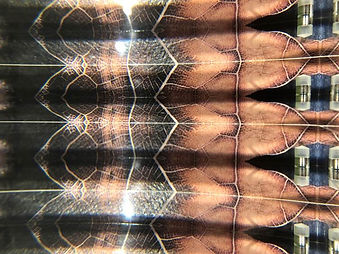
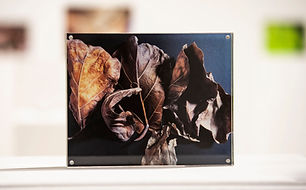
FOR THOSE WHO LIVE BY LIGHT (sequence 1) (2024)
Size: 600mm X 135mm X 145mm
Medium: mixed media, prints, inks, acrylic paint, leaves, perspex.


FOR THOSE WHO LIVE BY LIGHT (sequence 2) (2024)
Size: 600mm X 135mm X 145mm
Medium: mixed media, prints, inks, acrylic paint, leaves, perspex.


Close-ups and Details


Artist Statement
The works FOR THOSE WHO LIVE BY LIGHT are an outcome of the project PLANTS HAVE POEMS INSIDE THEM and are a response to Zoë Schlanger’s book on the life of plants, The Light Eaters. Becoming an attentive, keen, and tender observer of leaves and their life processes was the key drive behind this project. Leaves not only tell us their stories of the unstoppable transience states but also connect us to the living world. Their breath-outs are our breath-ins, forming a continuous harmony between the interiority of multitudes of chloroplasts tightly packed under the green protection of epidermis and the pink, oxygen-dependent epithelial cells of our lungs. Chloroplasts attest to their bond to the vastness of outer space and the energy of our closest star.
While paying deep attention to our biological environments is crucial for our own self-preservation, the main drive behind the work was the enchantment with the “in-betweenness” and ephemerality of all life forms. Looking at leaves close and anew, photo-documenting different stages of their being and paying attention to the entities usually taken for granted, can bring about an enriching experience. Light, its multidimensional reflections and refractions, the inner actions of bursts of energy, and the temporal states and processes occurring continuously in plants were approached as joyous and wondrous events.
Preparatory work





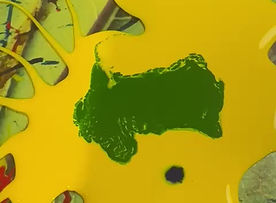
Plants have poems inside them
(Unisa Art Gallery, 2022)


Artist Statement
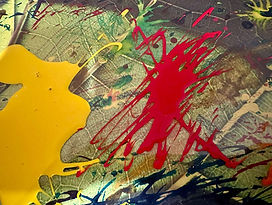
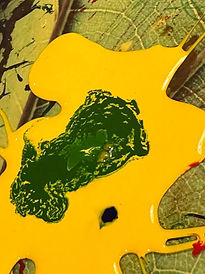
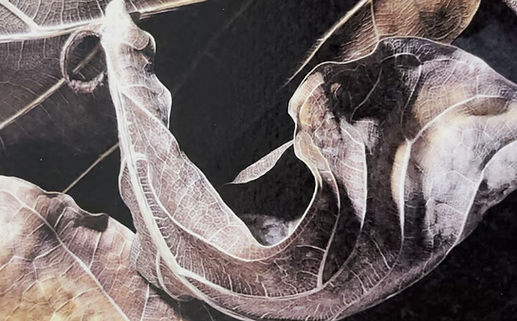
Being an attentive, keen, and tender observer of leaves and their life-processes was the key drive behind this project. Leaves not only tell us their stories of the unstoppable transience states but connect us to the living world. Their breath-outs are our breath-ins forming a continuous harmony between the interiority of multitudes of chloroplasts tightly packed under their epidermis and their bond to the vastness of the outer space and the energy of our closest star. As the poet, Maria Pawlikowska-Jasnorzewska (1891-1945) said, plants can be our role models for leading congruous and worth-while lives: “This group of entities taking from life what is good: peace, quiet and clear conscience. In harmony next to each other, they heal us with their example of undisturbed peace. The forest is more than a wood-sap treasure to our breath, a pitchy balsam for our tired lungs or a green kaleidoscope for our eyes.”
That the present atmosphere is rich in oxygen is the result of 2.7 billion of years of photosynthetic processes initiated by the first unicellular organisms like cyanobacteria, which unfailingly kept releasing oxygen into the Earth’s gases as a by-product of transforming carbon dioxide and sunlight into energy (Lane 2003). And artists like Joe Davis unfold the drama of these life-giving photosynthetic processes and pay tribute to “lower” life forms in RuBisCo Stars (2009) whereby sending chemical formulae of chloroplast enzymes191 essential for photosynthesis as radio signals into the cosmos to be the ambassadors of life on our planet, attest to the non-human part of ecology.



The questions I raise are environmentally ethical in the sense that Antonio Damasio (2003:171), the behavioural biologist and neuroscientist, claims Spinoza adumbrated,
The biological reality of self-preservation leads to virtue because in our inalienable need to maintain ourselves, we must, of necessity, help preserve other selves. If we fail to do so we perish and are thus violating the foundational principle and relinquishing the virtue that lies in self-preservation. The secondary foundation of virtue is the reality of a social structure and the presence of other living organisms in a complex system of interdependence with our own organism. We are in a bind, literally, in the good sense of the word … Spinoza ties it to a biological principle – the mandate for self-preservation … the foundation for a system of ethical behaviours and that foundation is neurobiological.
In other words, engaging with preservation and paying deep attention to our biological environments is crucial for our own self-preservation. However, while the ethical and mindful living is pivotal to the Plants have Poems inside them, the work is also driven by the re-enchantment with the “in-betweenness” and transience of all life forms. Looking at leaves close and anew, devotedly photo-documenting different stages of their being and paying attention to the entities usually taken for granted, can bring about a contemplation on our own brevity.


